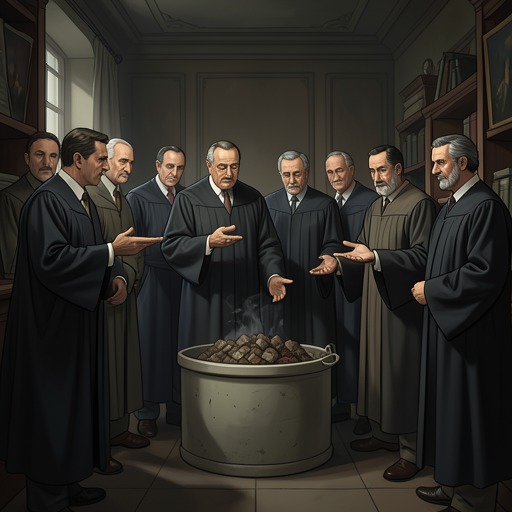
Herbert Kelman
How to Change Your MindHerbert Kelman’s importance in the Harvard Psilocybin Project controversy lay in making its internal objections public and specific: for him, the dispute was not simply over whether psychedelic drugs could produce profound experiences, but over scholarly rigor, participant welfare, and the pressure exerted by a research group’s social atmosphere. Initially a colleague willing to help Timothy Leary settle into academic life, Kelman became his chief departmental adversary and helped bring the project’s conflict before Harvard faculty and students.
Identity and Early Reservations
Kelman was a colleague of Leary in Harvard University’s Department of Social Relations. Their relationship began on recognizably collegial terms: Kelman helped Leary find his first house and remembered him as “personable.” But that friendliness did not amount to confidence in Leary’s scholarship. Kelman recalled that Leary spoke confidently about subjects he did not know, including existentialism, and told students that psychological research was a game. To Kelman, that attitude was cavalier and irresponsible, not a harmless provocation.
In a much later interview, Kelman, then in his nineties, lived with his wife in an overfull apartment at an assisted-living facility in West Cambridge. The account describes him as bearing no rancor toward Leary, while holding little respect for him as either a teacher or scientist. Kelman believed Leary’s disenchantment with science predated his psychedelic experiences. His retrospective judgment was blunt: “He was already halfway off the deep end.” That assessment complicates any account in which psilocybin alone transformed Leary’s intellectual direction; in Kelman’s view, the estrangement was already underway.
Objections to the Psilocybin Project
Kelman’s criticism became consequential when concerns about Leary and Richard Alpert’s project reached beyond private faculty conversations. In March 1962, he asked David McClelland to call a meeting of faculty and students. Kelman had heard from graduate students that a kind of cult had formed around Leary and Alpert, and that some students felt pressure to participate in drug-taking. The issue, as he framed it, was therefore not only the validity of the research but also the conditions under which people in the department were being drawn into it.
At the meeting, Kelman rejected the idea that the dispute could be contained as a routine scholarly disagreement. He said, “I wish I could treat this as scholarly disagreement, but this work violates the values of the academic community. The whole program has an anti-intellectual atmosphere. Its emphasis is on pure experience, not on verbalizing findings.” The contrast was central to his objection: experiences might be intense, but a research program still had to make them available to disciplined analysis and communication.
He also challenged the researchers’ manner of conducting the experiments. “I’m also sorry to say that Dr. Leary and Dr. Alpert have taken a very nonchalant attitude toward these experiments—especially considering the effects these drugs might have on the subjects.” His concern about risk was tied to the researchers’ apparent casualness toward it. In Kelman’s account, the possibility of consequential mental effects made care and supervision part of the academic question, not an issue that could be set aside in favor of enthusiasm for the experience.
The Department Divided
Kelman’s most pointed concern was that the drugs had become a means of drawing a boundary between insiders and outsiders. He said that participants were treated as members of an “insider” sect, while those who declined were called “squares.” He objected to a departmental culture in which taking part could function as a test of belonging: “I just don’t think that kind of thing should be encouraged in this department.” The complaint gave the controversy a social dimension. In his view, the project’s influence was shaping students’ standing among their peers as well as generating claims about the mind.
Alpert responded that the research belonged in the tradition of William James and cast Kelman’s criticism as an attack on academic freedom. Leary, by contrast, took a more conciliatory approach and agreed to some restrictions. The meeting appeared to end with the conflict contained. Its outward course reversed the next morning: a crowded room had concealed an undergraduate reporter for the Crimson, Robert Ellis Smith, who had been taking notes. The Crimson placed the dispute on its front page under the headline “Psychologists Disagree on Psilocybin Research.” The Boston Herald followed with the more sensational, though not entirely accurate, “Hallucination Drug Fought at Harvard—350 Students Take Pills.”
Narrative Role and Consequences
The meeting made Kelman a pivotal critic, but the account does not present him as the sole cause of the controversy or as someone who controlled its public aftermath. The reporter’s presence turned a discussion that participants thought had been settled into a newspaper story; Leary then became famous in part because he readily supplied reporters with provocative remarks. After Harvard required Leary’s supply of Sandoz psilocybin pills to be controlled by Health Services, he quipped, “Psychedelic drugs cause panic and temporary insanity in people who have not taken them.” The line sharpened the public spectacle, while Kelman’s objections had been directed toward the less theatrical questions of evidence, responsibility, and coercive group dynamics.
The episode positions Kelman as a defender of academic norms who also recognized that those norms were entangled with power inside the department. He challenged the project’s emphasis on experience without adequate scholarly articulation, its approach to the possible effects on participants, and the social penalties attached to abstention. The account’s wider consequence is explicit: psychedelics divided the Harvard department, anticipating the divisions they would soon provoke in the broader culture. Kelman’s role was to name that division while it was still being argued over as an internal academic matter.